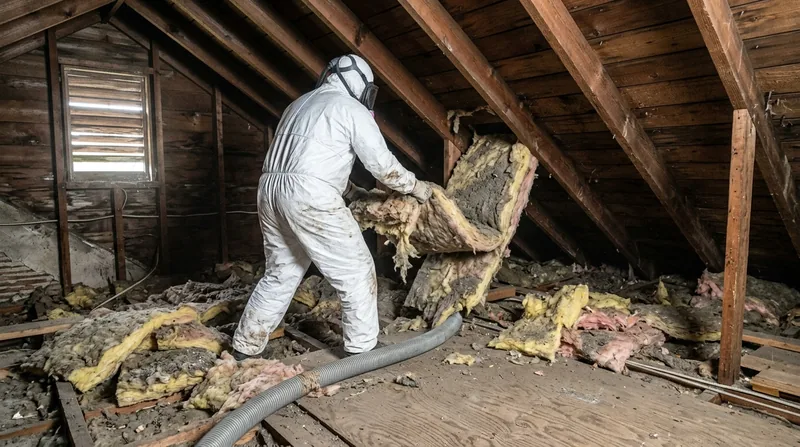




Old insulation in Des Moines attics sags, compacts, and holds moisture after years of humid Iowa summers and cold winters. Fiberglass that once held an R-value of R-38 settles to R-20 or lower. Cellulose absorbs water during the spring thaw and stays damp through the heating season, losing its thermal resistance and inviting mold. When you're ready to upgrade to spray foam or a fresh air seal, insulation removal in Des Moines is the necessary first step. We clear out failed fiberglass, cellulose, or mineral wool from attics and walls across Polk County, leaving you with a clean, dry substrate ready for new foam and a real air barrier. Call us at (515) 633-1026 for a free estimate, or read on to understand what the work involves and why it matters for homes in our climate.
Why Insulation Removal Matters in Des Moines Attics and Walls
Des Moines sits in IECC climate zone 5A, where stack effect during winter heating season pulls warm air up and out through the attic, and moisture-laden air leaks outward through walls and ceilings. Old fiberglass and cellulose do not stop that air movement, and they absorb and hold moisture that condenses on cold framing during the heating season. Beaverdale brick homes from the 1920s and 1930s, Sherman Hill Victorians, and the early bungalows around Drake and Highland Park often have wall cavities packed with decades-old mineral wool or fiberglass that has settled, compacted, or absorbed water. Postwar ranches and split-levels across Polk County carry vented attics with builder-grade batts that sag after twenty or thirty years. When you plan to spray foam an attic or inject foam into walls, you must remove the old insulation first. Spray foam adheres to clean wood, not to loose fill or damp fiberglass. We handle the removal so the new air seal works.
- We clear loose-fill fiberglass or cellulose from attics in one pass, using commercial-grade vacuums and contained removal techniques to contain dust and debris.
- We remove batts and blankets from walls before injection foam retrofit, cutting away old material to expose the cavity and stud structure.
- We dispose of old insulation legally, separating any recyclable material and handling damp or contaminated batches per local waste guidelines.
- We leave the substrate clean, dry, and ready for new foam, with no loose fibers or moisture that would compromise the new air seal.
Proper removal is the foundation of a successful retrofit. Without it, new foam does not bond correctly and air leakage persists.
Key info: An attic in West Des Moines or Ankeny with R-38 fiberglass that has settled to R-20 or lower will lose 30 to 40 percent of its original thermal resistance. Removal and replacement with 4 to 6 inches of closed cell foam restores the air barrier and reclaims that lost performance in a single retrofit.
See our attic spray foam insulation service to learn what comes after removal.
How We Remove Insulation in Des Moines: Step-by-Step Process
Removal is not demolition. We use controlled, contained techniques to clear old insulation without scattering debris through your home or leaving dust in your ducts and living spaces. We start with a walk-through to assess the type and volume of material, access routes, and any obstacles like HVAC ducts, wiring, or plumbing. We then set up containment barriers, seal off living spaces, and use commercial-grade vacuum systems to extract loose-fill material or hand-remove batts and blankets. Once the space is clear, we inspect for any moisture, mold, or damage to the substrate and report our findings to you before we proceed to new foam installation.
- We schedule a site visit to measure the attic or wall cavity, identify the type of insulation, and assess access and containment needs.
- We seal off living spaces with plastic sheeting and tape to prevent dust migration into your home during removal.
- We use commercial vacuum systems and containment bags to extract loose-fill fiberglass or cellulose without releasing fibers into the air.
- We hand-remove batts or blankets from walls or attics, cutting them free and bagging them for disposal.
- We inspect the substrate for moisture, mold, or structural damage and dry the space if needed before new foam installation begins.
- We dispose of all old insulation at a licensed facility and provide you with a summary of what was removed and why.
The entire process typically takes one to two days depending on attic size and insulation type, and leaves your space ready for a fresh start.
Real example: A 1,200-square-foot attic in Urbandale with compacted R-38 fiberglass and a damp layer of cellulose on top took our crew one full day to remove. The substrate was clean and dry, the rim joists were exposed and ready for foam, and the homeowner avoided the DIY mess of hauling batts down the attic stairs.
Learn more about insulation replacement and re-insulation options to see how your removed space becomes a high-performance envelope.
Insulation Removal Methods: Loose-Fill, Batts, and Blankets
| Method | Material Type | Best For |
|---|---|---|
| Commercial Vacuum Extraction | Loose-fill fiberglass or cellulose | Attics with settled or compacted fill, minimal dust release into living spaces |
| Hand Removal and Bagging | Fiberglass or mineral wool batts and blankets | Wall cavities before injection foam, attics with roll insulation, controlled and contained removal |
| Damp or Contaminated Material Removal | Moisture-saturated fiberglass or cellulose | Attics with water damage or condensation, crawl spaces with high humidity, health and safety priority |
| Substrate Inspection and Drying | Wood framing, joists, rim board after removal | Preparing a clean, dry surface for new spray foam installation, verifying structural integrity |
Insulation Removal Cost in Des Moines: What to Expect
Insulation removal in Des Moines typically starts at $950 for a small attic or a single-wall cavity retrofit. The final price depends on the volume of material, the type of insulation, access difficulty, and whether the substrate is damp or contaminated. A 1,200-square-foot attic with settled fiberglass costs more to remove than a 600-square-foot knee-wall space. Cellulose, which requires careful vacuum containment, may cost slightly more than fiberglass. If the substrate is damp or the space has absorbed water, we may need to dry it before foam installation, which adds time and cost. Access also matters: an attic with a full staircase and open framing is faster to clear than one with a pull-down ladder and tight joists. We always provide a written estimate with the scope, square footage, and removal method before we start work.
Getting two or three estimates from different contractors is smart. Compare what each one includes in the removal cost, how they handle disposal, and whether they inspect the substrate afterward. The cheapest estimate is not always the best if it skips containment or leaves damp material in place. We price our work fairly and stand behind the quality of the removal, so your new foam installation goes smoothly and your air seal lasts.
See our full pricing overview for more detail on removal costs and what drives the estimate.
What to Look for When Hiring an Insulation Removal Contractor Near Des Moines
Insulation removal is a trade skill, not a DIY project. A professional contractor brings commercial-grade equipment, proper containment techniques, and knowledge of disposal regulations. When you call a spray foam or insulation contractor near Des Moines, ask whether they handle removal in-house or subcontract it. Ask how they contain dust during removal and where they dispose of old material. Ask for references from recent attic or wall retrofit jobs. Check that they carry full insurance and can provide a certificate of coverage on request. Verify their estimate is written and includes the square footage, material type, and removal method so you know exactly what you are paying for.
- Request a written estimate that breaks down the removal cost, the disposal method, and the timeline for the job.
- Ask whether the contractor inspects the substrate for moisture or damage and what they do if they find it before proceeding to new foam.
- Verify that the contractor is fully insured and ask to see a certificate of liability coverage.
- Check references from homeowners in Des Moines, West Des Moines, Ankeny, or Urbandale who have had removal and foam retrofit done.
- Ask about the contractor's experience with your specific insulation type (fiberglass, cellulose, mineral wool) and whether they have removed similar volumes before.
A contractor who takes time to explain the removal process and answers your questions about containment and disposal is more likely to deliver a quality job than one who rushes through an estimate and quotes a price over the phone with no site visit.
Ready to move forward? Contact us for a free estimate or call (515) 633-1026 to discuss your insulation removal and next steps.
Insulation Removal in Des Moines: Pricing Guide
| Service | Price | Details |
|---|---|---|
| Small attic or single-wall cavity removal | Starting at $950 | Loose-fill or batt removal from spaces under 800 square feet with standard access and dry substrate |
| Medium attic removal | Starting at $1,400 | Fiberglass or cellulose removal from 800 to 1,500 square feet with commercial vacuum containment and substrate inspection |
| Large attic or multi-cavity removal | Starting at $2,100 | Removal from attics over 1,500 square feet or wall cavities across multiple rooms with full containment and disposal |
| Damp or contaminated material removal | On estimate | Moisture-saturated insulation or material requiring special handling and substrate drying before foam installation |
| Disposal and haul-away | Included | All old insulation removed from your home and disposed of at a licensed facility with no additional charge |
| Free estimate | No obligation | Written quote within 24 hours with removal scope, square footage, and method specified, call (515) 633-1026 |
Indicative pricing, the exact cost depends on square footage, finish, and site access. Free personalized estimate within 24h at (515) 633-1026.


