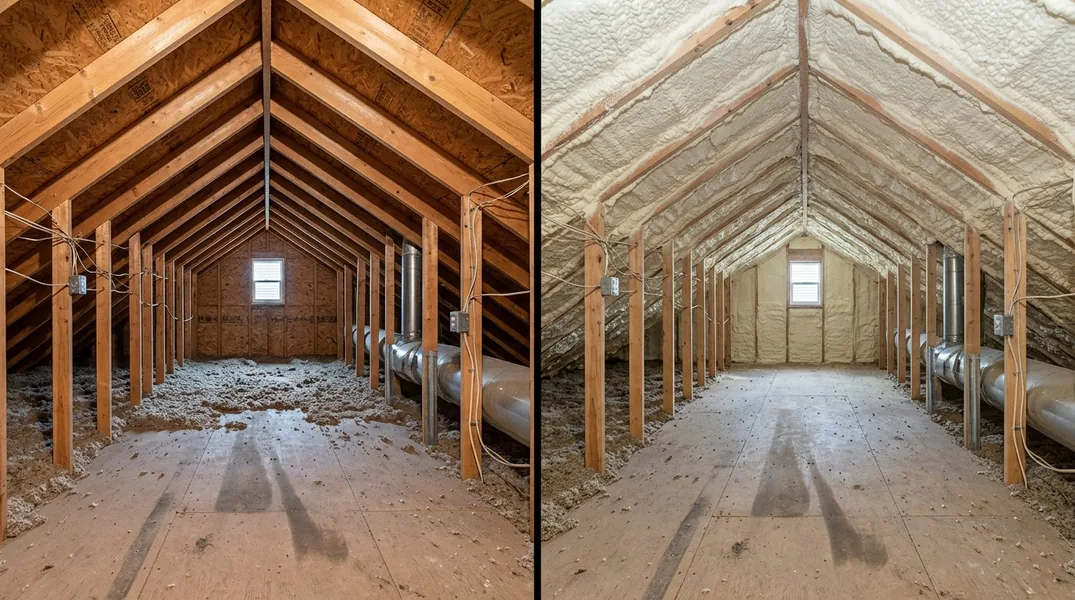
Understanding Spray Foam Attic Insulation: The Basics
When it comes to keeping your Des Moines home comfortable year-round, few upgrades deliver the performance of Attic Spray Foam Insulation. Whether you're dealing with brutal winters or sweltering summers, your attic plays a critical role in maintaining indoor temperatures and managing energy costs. Traditional insulation materials like fiberglass batts have served homeowners for decades, but spray foam technology has revolutionized how we think about insulation efficiency.
Spray foam insulation works by expanding into cracks, crevices, and gaps that traditional materials simply cannot reach. This expansion creates an air-tight seal that prevents conditioned air from escaping and outdoor air from infiltrating your living spaces. The two main types of spray foam available to homeowners are open cell and closed cell formulations, each with distinct characteristics, performance levels, and applications. Understanding the differences between these options is essential for making an informed decision about your home's insulation needs.
What Is Open Cell Spray Foam Insulation?
Open Cell Spray Foam Insulation is a lighter-density foam that contains cells that are not completely closed. This structure allows air and moisture to pass through the foam after it has cured. Open cell foam typically has an R-value of approximately 3.6 per inch, making it a good insulator but not the highest performer on the market. The foam expands significantly during application, which allows it to fill irregular spaces and conform to the unique contours of your attic.
One of the primary advantages of open cell foam is its lower cost compared to closed cell alternatives. For homeowners in Des Moines looking to improve their attic insulation without breaking the bank, open cell foam represents an attractive middle ground between traditional fiberglass and premium closed cell solutions. Additionally, open cell foam is semi-permeable, which means it allows moisture vapor to diffuse through it. This characteristic can be beneficial in certain climate conditions and attic configurations, as it permits the attic to breathe and helps prevent moisture accumulation in some scenarios.
However, open cell foam does have limitations. Because it is semi-permeable, it does not provide an effective air barrier on its own and may not be the best choice for applications requiring strict moisture control. It also has a lower structural density, which means it provides minimal support and cannot be used as a structural element in your home.
What Is Closed Cell Spray Foam Insulation?
Closed Cell Spray Foam Insulation represents the premium option in spray foam technology. This denser foam contains cells that are completely closed and packed tightly together, creating a rigid, moisture-resistant barrier. Closed cell foam delivers an impressive R-value of approximately 6 to 7 per inch, nearly double that of open cell foam. This superior insulation value means you need less material to achieve the same thermal resistance, which can be particularly valuable in attics where space is limited.
The primary advantage of closed cell foam is its exceptional air-sealing properties and moisture resistance. When you apply closed cell foam, it creates a complete thermal and moisture barrier that prevents both air infiltration and water vapor transmission. This makes it the ideal choice for unvented attic spray foam applications, where you want to create a sealed, conditioned attic space. The rigid nature of closed cell foam also provides structural support and can actually increase the racking strength of your roof assembly.
The trade-off with closed cell foam is cost. It typically runs two to three times more expensive than open cell foam due to its superior performance characteristics and the specialized equipment required for installation. For many homeowners, however, the long-term energy savings, superior moisture control, and durability make the investment worthwhile. Closed cell foam is particularly valuable in humid climates or homes with complex attic configurations where moisture management is critical.
Comparing Performance: Which Foam Wins for Des Moines Homes?
Des Moines experiences a continental climate with cold, snowy winters and warm summers, making attic insulation performance genuinely important for homeowner comfort and energy efficiency. When comparing open cell and closed cell spray foam for this specific climate, several factors come into play. Closed cell foam's superior R-value and air-sealing capabilities make it the stronger performer for thermal insulation, particularly during the harsh winter months when temperature differentials between inside and outside are greatest.
Energy efficiency is where closed cell foam truly shines. The superior insulation value means your heating and cooling systems work less hard to maintain comfortable indoor temperatures, resulting in measurable reductions in utility bills. For homeowners planning to stay in their Des Moines homes for many years, the cumulative savings from lower energy consumption can easily justify the higher initial investment in closed cell foam. Additionally, closed cell foam's complete air seal eliminates drafts and cold spots that can make certain rooms uncomfortable during winter.
Open cell foam still provides meaningful insulation improvements over traditional materials and may be the right choice if budget is the primary concern. However, it requires careful attention to ventilation and moisture management, and it does not provide the same level of air sealing. If your attic currently has ventilation in place and you want to maintain that system, open cell foam can work effectively. But if you are considering transitioning to a sealed attic insulation strategy, closed cell foam is the superior choice.
Attic Spray Foam Insulation Cost in Des Moines: What to Budget
Understanding the financial investment required for spray foam insulation is crucial for homeowners planning their upgrades. The pricing for attic spray foam insulation varies significantly based on foam type, attic size, complexity of the space, and current insulation conditions. Open cell foam typically costs between $0.50 and $1.00 per board foot, while closed cell foam ranges from $1.50 to $3.00 per board foot or more, depending on local market conditions and contractor expertise.
For a typical Des Moines home with a 1,500 square foot attic, open cell foam installation might cost between $3,000 and $6,000, while closed cell foam could range from $9,000 to $18,000 or higher. These figures are estimates and actual costs depend on your specific situation, including attic accessibility, existing insulation removal requirements, and local labor rates. While closed cell foam costs more upfront, many homeowners recoup their investment through energy savings within 5 to 10 years, after which they continue enjoying reduced utility bills for decades.
Rather than focusing solely on the lowest initial cost, consider the long-term value proposition. Closed cell foam provides superior performance, longer-term durability, and greater energy savings. Open cell foam may be appropriate if you have budget constraints or specific moisture management needs. To understand the true cost-benefit analysis for your home, contact Des Moines Spray Foam Insulation at (515) 633-1026 to schedule a free estimate and detailed cost analysis.
Choosing the Right Foam for Your Des Moines Home
Selecting between open cell and closed cell spray foam ultimately depends on your specific priorities, budget, and home characteristics. If energy efficiency and long-term performance are your primary concerns, closed cell foam is the clear winner. Its superior R-value, complete air sealing, moisture resistance, and structural benefits make it the premium choice for most homeowners. If you are building a new home or planning a major renovation, closed cell foam justifies its higher cost through decades of superior performance.
Open cell foam makes sense if you want meaningful insulation improvements at a lower price point and your attic can accommodate proper ventilation. It works well for homeowners on tighter budgets who are willing to accept slightly lower performance levels. Open cell foam also offers environmental advantages for some homeowners, as certain formulations use water as a blowing agent rather than chemical alternatives.
The best approach is to consult with experienced professionals who understand Des Moines' specific climate challenges and can evaluate your home's unique characteristics. Des Moines Spray Foam Insulation has helped hundreds of local homeowners make this decision by providing honest assessments and detailed recommendations. Whether you need Attic Spray Foam Insulation, Wall & Injection Foam Insulation, or have questions about sealed attic insulation, our team is ready to help. Call (515) 633-1026 today to discuss your insulation project and get expert guidance tailored to your home's needs.
Looking for a professional spray foam insulation contractor in Des Moines? Des Moines Spray Foam Insulation responds fast for all your spray foam insulation needs.
Get a Free Quote