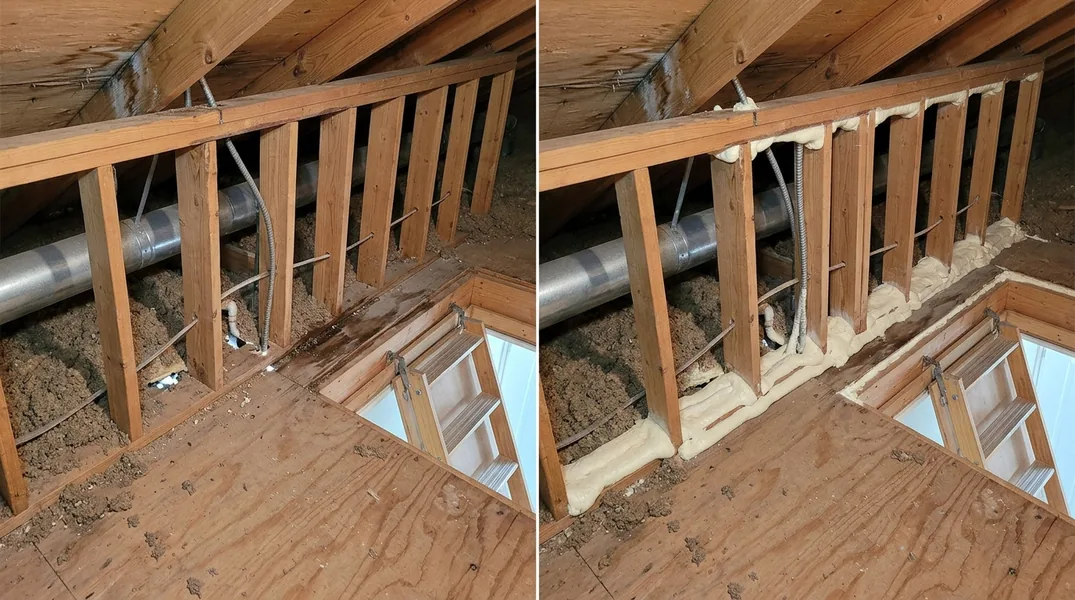
Open Cell vs Closed Cell Spray Foam: Which Is Right for Your Project?
When you're planning an insulation project in Des Moines, one of the first decisions you'll face is choosing between Open Cell Spray Foam Insulation and Closed Cell Spray Foam Insulation. These two options perform differently and suit different applications, so understanding the distinction is crucial before you move forward.
Open cell spray foam is lighter and more flexible. It has a lower density and allows moisture vapor to pass through, which makes it ideal for interior applications where breathability matters. Because open cell foam is less dense, it typically costs less upfront and provides good sound dampening properties. However, it offers a lower R-value per inch compared to its closed cell counterpart, so you may need a thicker application to reach your target insulation performance. Open cell works well for attics, interior walls, and spaces where you want to maintain some vapor permeability.
Closed cell spray foam is denser and more rigid. Its cells are completely closed, which means it creates a true vapor barrier and provides superior moisture resistance. This makes closed cell foam an excellent choice for exterior applications, crawl spaces, basements, and anywhere moisture intrusion is a concern. The higher density also means closed cell delivers better structural support and a higher R-value per inch, giving you more insulation performance in a thinner layer.
Understanding Spray Foam R-Value: What Does It Really Mean?
The R-value is one of the most important metrics when evaluating insulation performance, yet many homeowners don't fully understand what it measures. R-value indicates thermal resistance, or how effectively a material slows heat transfer. The higher the R-value, the better the insulation performance. When comparing closed cell spray foam R value to other insulation types, you'll notice spray foam consistently outperforms traditional fiberglass or cellulose on a per-inch basis.
The closed cell spray foam R value typically ranges from R-6 to R-7 per inch, depending on the specific product and installation conditions. Open cell foam generally delivers R-3.5 to R-3.6 per inch. This means if you need R-38 insulation in your attic using open cell, you'd need roughly 11 inches of material, while closed cell would only require about 5.5 to 6 inches. Your choice depends on your available space, budget, and specific performance requirements for your Attic Spray Foam Insulation project.
It's also worth noting that Des Moines experiences significant temperature swings throughout the year, from hot summers to cold winters. This means having adequate insulation with a solid R-value is essential for maintaining comfort and controlling energy costs. Before you commit to any spray foam project, ask your contractor what R-value you're actually achieving and whether it meets local building codes and your energy efficiency goals.
What's Your Budget? Understanding Spray Foam Insulation Pricing in Polk County
Cost is always a practical consideration, and spray foam insulation comes with a higher upfront investment than traditional insulation methods. However, understanding the value proposition helps justify the expense. When researching pricing for your project, you'll find that closed cell typically costs more per square foot than open cell, but delivers better performance and durability. Open cell is a more budget-friendly entry point into spray foam insulation, especially for large attic projects where the lower R-value per inch doesn't pose a problem.
Several factors influence the final cost of your spray foam project. The size of the area being insulated, the type of foam selected, the thickness required to meet your R-value target, and the complexity of the installation all play a role. Additionally, if you're dealing with an older home in Des Moines that requires prep work, air sealing, or removal of existing insulation, those services add to the overall project cost. Many homeowners find that the energy savings over time offset the initial investment, particularly in regions with significant heating and cooling demands like Polk County.
Rather than guessing at costs, reach out to Des Moines Spray Foam Insulation for a free estimate. Our team can assess your specific situation, recommend the best foam type for your needs, and provide transparent pricing so you know exactly what to expect before work begins. Call us at (515) 633-1026 to schedule your consultation.
Attic Spray Foam Insulation Near Me: When to Call a Professional
If you're searching for Attic Spray Foam Insulation services in your area, you're likely noticing temperature fluctuations in your home or seeing higher than normal energy bills. Your attic is one of the most critical areas for insulation because heat rises in winter and collects in summer. A poorly insulated attic can account for significant energy loss, making your heating and cooling systems work harder than necessary.
Professional installation is essential for spray foam because the application requires specialized equipment, proper mixing ratios, and trained technicians who understand ventilation, moisture management, and building code compliance. DIY spray foam kits exist, but they often result in uneven coverage, wasted material, and suboptimal performance. When you hire Des Moines Spray Foam Insulation, you're getting experienced professionals who know how to properly prepare your attic, apply the foam to the correct thickness, and ensure the job meets all local building standards.
Common signs that your attic needs attention include ice dams forming on your roof in winter, visible moisture or mold growth, drafts in upper-level rooms, and pest activity. If you're experiencing any of these issues, professional Attic Spray Foam Insulation can address the root cause while simultaneously improving your home's energy efficiency and comfort.
Beyond the Attic: Other Spray Foam Applications in Your Home
While attics are the most common application for spray foam, homeowners in Polk County can benefit from this technology in several other areas. Wall & Injection Foam Insulation is an excellent solution for existing walls where traditional insulation is difficult or impossible to install. If you have an older home or are retrofitting a space, injection foam allows contractors to fill cavities without major demolition, preserving your walls while dramatically improving insulation performance.
Basements and crawl spaces are also prime candidates for spray foam insulation. These areas are particularly vulnerable to moisture intrusion and temperature loss, which is why the moisture-resistant properties of closed cell foam make it an ideal choice. Many homeowners in Des Moines discover that insulating their basement or crawl space yields significant comfort improvements and can even prevent costly water damage and mold growth. Additionally, if you're building an addition or finishing a space, spray foam can be incorporated into the framing to create a fully insulated and air-sealed envelope.
The versatility of spray foam means your contractor can customize a solution for your specific needs, whether that's Attic Spray Foam Insulation, basement work, or Wall & Injection Foam Insulation. When you're ready to explore options beyond the attic, Des Moines Spray Foam Insulation can help you identify the best application for your home and budget.
Key Questions to Ask Your Contractor Before You Sign
Before committing to any spray foam project, you should have a detailed conversation with your contractor about several important topics. Ask which type of foam they recommend and why, what R-value you'll achieve, and how the finished installation will be inspected to ensure quality. Request references from recent projects in your area and ask about their experience with homes similar to yours. Understanding their process, timeline, and warranty coverage is also essential.
It's equally important to discuss ventilation and moisture management with your contractor. Improper installation can trap moisture and lead to mold or wood rot, particularly in attics. Ask how they'll maintain proper ventilation if you're using closed cell foam, and what precautions they take to prevent moisture-related issues. Additionally, clarify whether the quoted price includes air sealing, removal of old insulation, and any necessary prep work, or if those services will be billed separately.
Finally, make sure your contractor is insured, and familiar with local building codes in Polk County. Don't hesitate to ask for a written estimate that breaks down all costs and clearly specifies the materials and labor involved. When you're ready to move forward with your spray foam project, Des Moines Spray Foam Insulation is here to answer your questions and provide professional guidance. Call (515) 633-1026 or visit our website to request a free estimate today.
Looking for a professional spray foam insulation contractor in Des Moines? Des Moines Spray Foam Insulation responds fast for all your spray foam insulation needs.
Get a Free Quote